
Think back to the most exhausting day you can remember—the one where every word you spoke felt like a pebble thrown against an immovable wall of indifference. You laid out your thoughts with surgical precision and every feeling within you, only to watch them bounce back unheard, as if they’d never been spoken at all. Now imagine standing in a room full of familiar faces—coworkers you trust, friends you’ve laughed with—yet you feel more isolated than you ever have. A quiet thought settles in your chest: “You don’t belong here.” You start scanning the room for a pair of eyes that might understand, and then you begin to realize what you’ve been missing the entire time: belonging is everything.
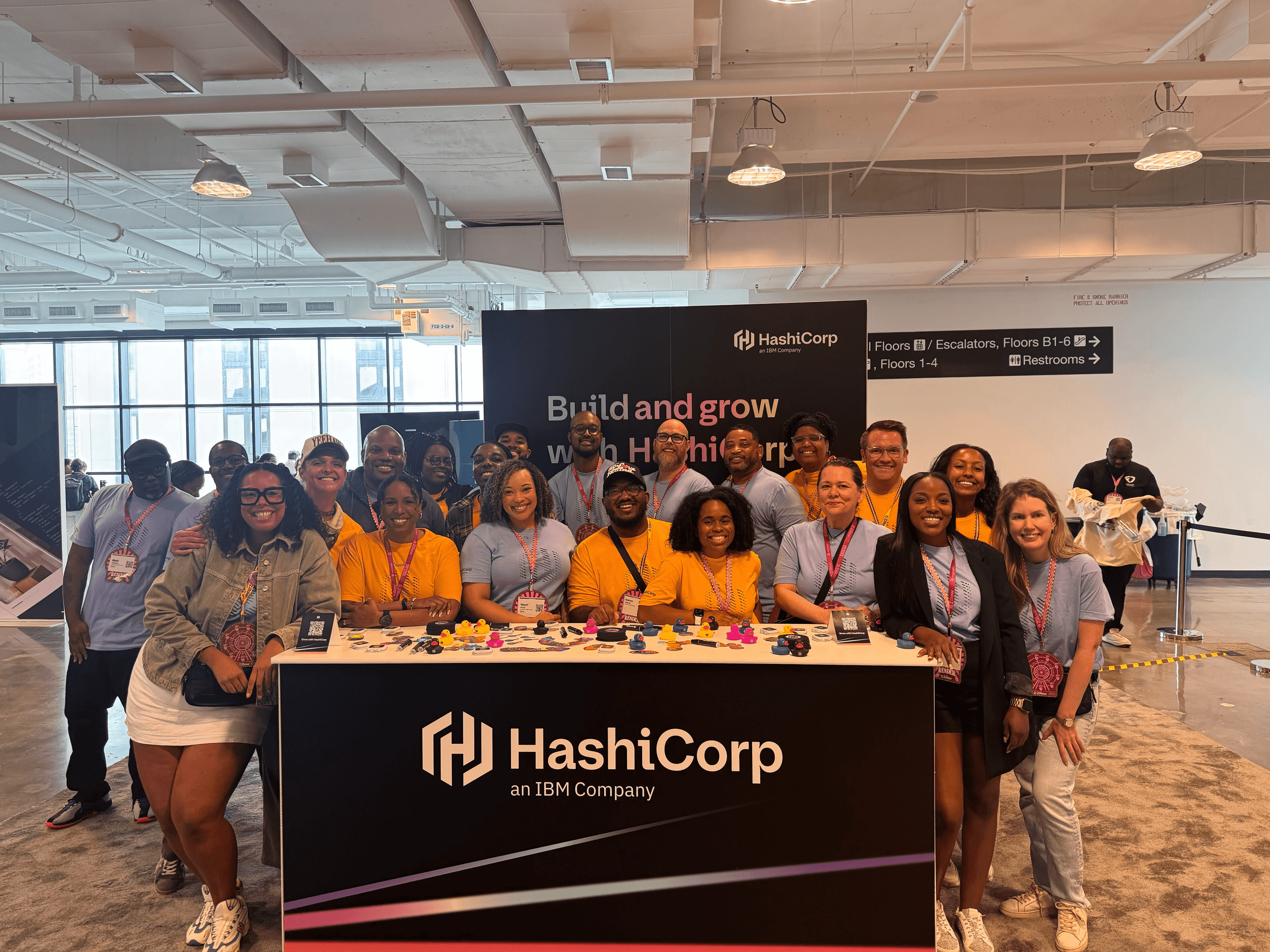
I’ve been to conferences before. Some massive, others more intimate. But walking into the expo hall at RenderATL felt different. The space wasn’t trying to impress with flashy displays or overly polished marketing gimmicks (aside from the comically oversized badges 😆). It felt honest. Human. Real. It wasn’t about trying to prove something—it was about showing up as you are and still being seen. More than anything, it felt like the kind of culture I’ve spent years looking for in business spaces—something I didn’t really find until my time at HashiCorp. It felt Black. Not performatively. Not as a theme. But in its presence, its ease, its joy. In the way people dapped each other up between deep technical conversations. In the way music, fashion, and culture showed up unapologetically, without needing to be explained. It felt like home. And for the first time in a long time, in a room that large, I didn’t feel like I had to shrink any part of myself to belong.
What is RenderATL?
Quick Facts
- RenderATL blends culture and code, creating space for real conversations, deep technical learning, and unapologetic self-expression.
- Founded in 2019 by Justin Samuels, with a mission to center and elevate Black technologists in the tech industry.
- Held annually in Atlanta, bringing together thousands of developers, designers, product thinkers, and creators.
- Over 100 sessions and 80+ speakers, covering everything from AI and DevOps to leadership, design, and identity in tech.
- Not just a conference—an experience, with live music, food, art, and community woven into every part of the event.
RenderATL is more than just a tech conference—it’s a cultural experience rooted in community, connection, and authenticity. Founded to bridge the gap between culture and code, RenderATL brings together engineers, designers, product thinkers, and creators from all walks of life, with a special focus on elevating Black voices in tech. Set in the heart of Atlanta, the event blends deep technical content with real conversations about identity, access, and belonging. From keynotes and workshops to concerts and cookouts, RenderATL isn’t about fitting into the industry—it’s about redefining it on our own terms.
Why Does It Matter?
Because representation isn’t just about being seen—it’s about being understood. In an industry where Black professionals make up less than 8% of the tech workforce, and even fewer hold leadership roles, the absence is loud. It shows up in the tools we build, the conversations we avoid, and the spaces where people feel like they have to code-switch just to be heard. RenderATL pushes back against that. It creates a space where culture isn’t a costume—it’s a cornerstone. Where people of color don’t have to explain themselves before they contribute. Where the work, the brilliance, and the humanity of Black technologists isn’t the exception—it’s the expectation. And that kind of space doesn’t just feel good; it shifts the standard.
It’s those familiar eyes in the room that bring it all home. The nods, the handshakes, the dap-ups—they feel like something you’ve known your whole life. The faces remind you of cousins, mentors, the aunties and uncles who saw your potential before you knew how to name it. And the conversations? They don’t just spark ideas—they light up entire paths. You hear someone speak about their journey and suddenly, the road ahead feels less like a mystery and more like a map. You realize you’re not the only one who’s had to navigate around closed doors—you’re surrounded by people who’ve kicked some of them open and are willing to show you how they did it. That’s the power of spaces like this: they don’t just affirm that you belong, they help you build, walk, or even reimagine the path forward.
My Time
I’m not going to hold you—a part of me walked into the expo hall already checked out. Not in a disrespectful way, just in that quiet, familiar rhythm that starts to set in after you’ve done this enough times. Set up the booth. Shake a few hands. Have the same surface-level conversations. Catch a cold. Smile through a team dinner. Trade some swag. Break it all down. Go home. Do it again a few months later. These kinds of events can start to blur together when you’ve been in tech long enough. The rooms get bigger, the titles get longer, but the feeling? It starts to fade. And if I’m being honest, I think some of us have gotten used to that. We start expecting less, asking for less, and assuming that maybe this is just what the industry is.
But something about Render pulled me out of that cycle. From the very first moment, it felt like the script had been flipped. I wasn’t just there—I was present. Every conversation felt a little deeper, a little more intentional. The handshakes didn’t feel like transactions—they felt like recognition. The laughter in the hallways didn’t sound like small talk—it sounded like release. And as I stood in that space, surrounded by people who looked like me, moved like me, spoke like me, I realized how much I’d missed that. How much I needed it. This wasn’t just another line on the calendar. It was a reminder that being seen, fully and without filter, still matters. And more than that, it reminded me that we don’t have to accept the version of this industry we were handed. We can build something better. Together.
That energy carried into everything—including the moment I got to step on stage with my peer Kedron Abbott to give a lightning talk about burnout. Not tools. Not roadmaps. Not some hyper-polished case study with slides full of buzzwords. Just two Black men, standing in front of a crowd, talking honestly about the weight we carry, the pressure to keep performing, and the importance of protecting your peace. We didn’t overcomplicate it because we didn’t need to. The truth is, behind all the dashboards, diagrams, and data, there are still humans holding it all together. And sometimes, the most powerful thing you can do at a tech conference isn’t to show off how much you know—it’s to remind folks they’re not alone.
Some of My Biggest Takeaways
We’ve got to stop dimming our own shine. Somewhere along the way, a lot of us started believing we had to make ourselves smaller to be accepted. Like we had to earn our place twice just to be taken seriously once. We make the industry feel more complicated than it needs to be. We forget just how much we’ve already overcome to even be in these rooms. As Black people. As women. As men. As young adults finding our voice. As older adults reclaiming it. As professionals, students, career-changers, and everything in between. As humans.
We spend so much time listing what we’ve done—what we’ve shipped, led, delivered—but not nearly enough time honoring who we are, and how that identity shapes the work we do. The way we navigate pressure. The way we lead with care. The way we build because we’ve had to. That’s not something extra. It’s the root of our impact.
So the real question isn’t just “What do I want to do?” It’s “How does who I am help get me there?” And how do I stop shrinking that truth just to make other people comfortable? We’ve fought too hard and come too far to keep selling ourselves short. Our presence isn’t the bonus—it’s the value.
The Biggest Takeaway
This one had to be the biggest takeaway. I’ve worked with a lot of great people throughout my career, but the group I’ve had the privilege of attending Render—and other conferences—with is different. They’re special. I don’t usually subscribe to the “we’re a family” mindset that gets thrown around in corporate settings, but this? This feels like something else entirely.
As an ERG leader, I’ve always said we aim for a cookout vibe—something real, grounded, and full of life—and I carry that spirit with me wherever I go. But what makes it work isn’t the vibe alone. It’s the people.
My team is incredible. We laugh until our sides hurt. We debate like cousins around a table after Sunday service. We dance in torrential downpours, knowing full well it’s probably a terrible idea. But it never feels performative. It’s real. And that’s what makes all of this matter. This is what representation looks like in motion. It’s not just about having a seat at the table. It’s about being able to sit at that table as your full self. No mask. No code-switching. No shrinking. Just showing up, being human before anything else—and Black above the tech.