Destination / Archive · Place history
BlackStory
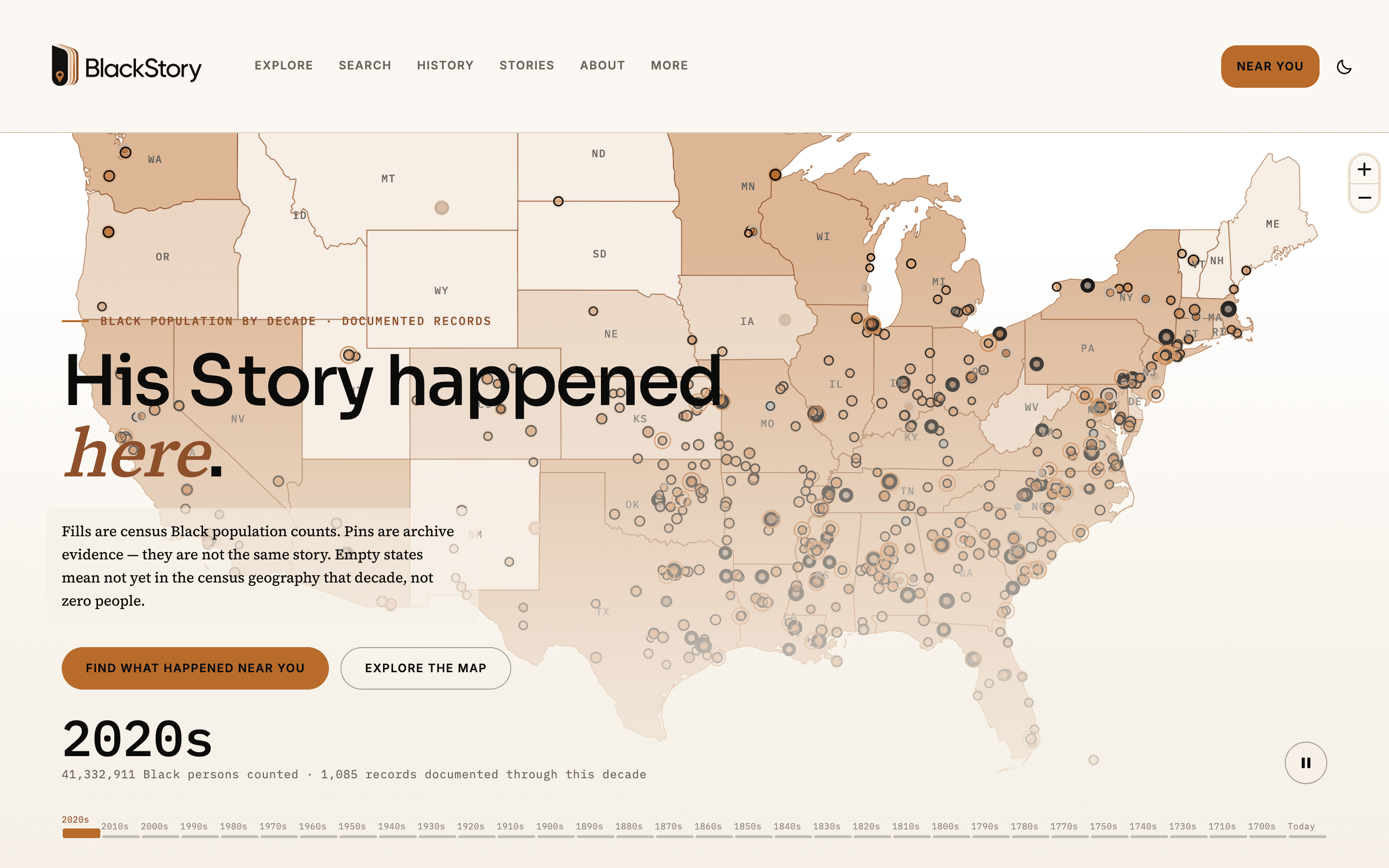
Black history is everywhere — not a handful of famous incidents in a handful of famous cities, but a continuous, documented presence across every state, county, and neighborhood. BlackStory makes that presence visible and verifiable at once: show how much is here, and for every single thing shown, show the receipts.
bsHistory, pinned to place.
In build · research platformThe thesis
Presence and proof, together
An archive of record with receipts. Every fact traces to evidence: source, capture, confidence, and — when evidence conflicts — the conflict itself, preserved rather than resolved by fiat. Not a crowdsourced trivia site and not a raw research dump; the layer between the two, where only claims that clear the evidence bar get a public page.
What holds
Presence. Evidence. Dignity.
- 01
Presence — People, schools, institutions, and events stay on the ground — not a trauma-first feed, and not a remote museum shelf.
- 02
Evidence — Accepted claims carry citations and confidence you can read. When sources disagree, both stay visible.
- 03
Dignity — Street-level residences stay off the public map. Living people stay protected. Presence is never framed as deficit.
The register
Proud, precise, unflinching — never trauma-forward
Hard history is part of the record where it belongs, but it is never the default lens or the hook. A place's page leads with what's documented about the place — people, institutions, events across time — not with the worst thing that happened there. Crime and tragedy never organize the product.
Who it serves
Accountable place history
Readers, educators, journalists, and community researchers who need accountable place history — not anonymous scrapes, not unverifiable timelines, not a wiki anyone can silently rewrite. The tool makes trust checkable rather than asking for it.
Source, issues, and the actual code.